
The useful part is what you do with that information. Ask how the measurements and observed leak locations change the proposed work. A result should help you make a decision.
What the equipment measures
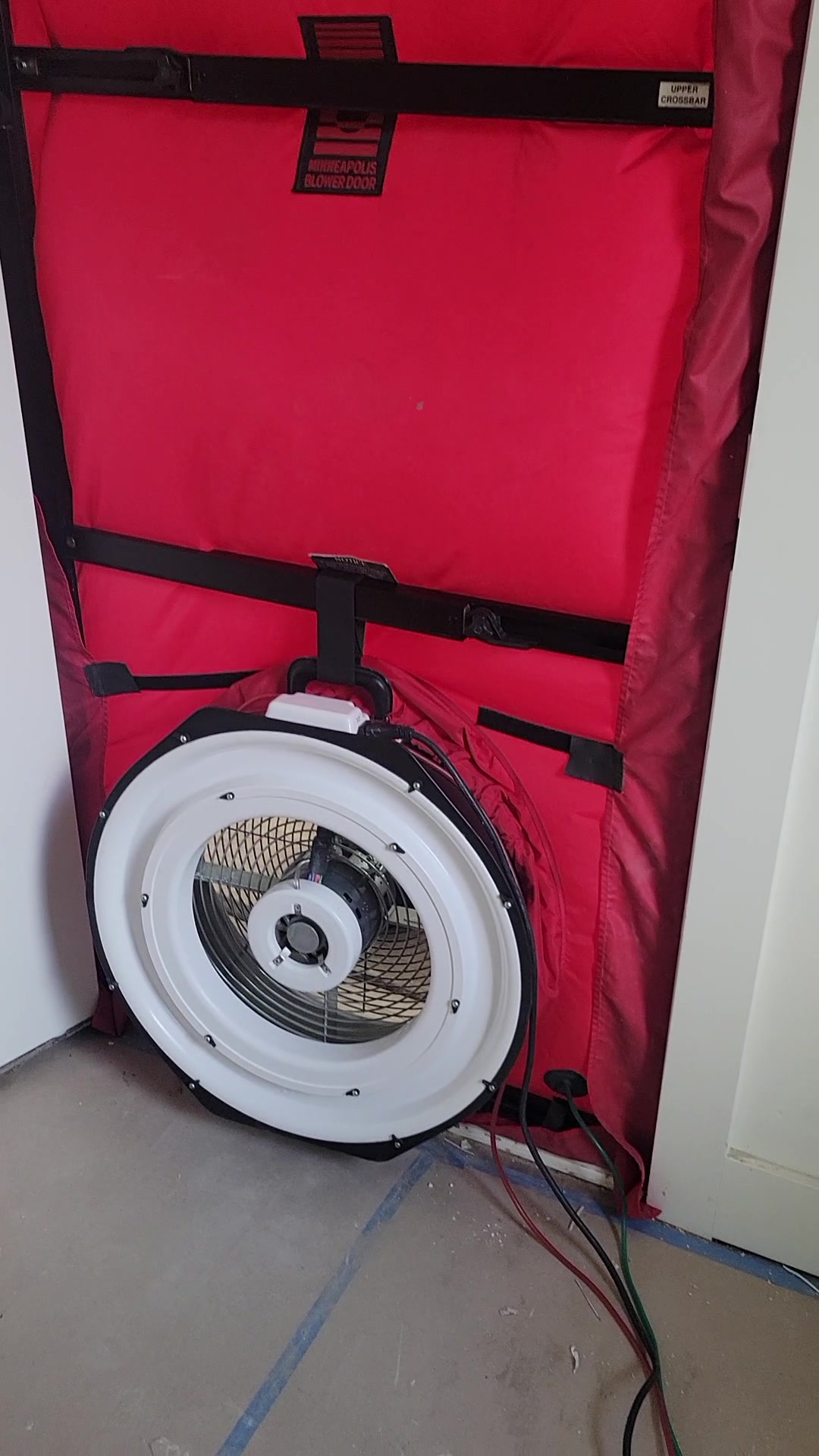
A blower door uses a fan mounted in a temporary panel in an exterior doorway. The fan changes the pressure inside the home, and calibrated equipment measures airflow. That controlled pressure helps reveal air moving through openings in the building enclosure—the walls, ceilings and floors separating conditioned space from outside or unconditioned areas. PNNL explains the test.
While the fan runs, smoke tracing and, under suitable conditions, thermal imaging can help investigate suspected leak locations. These tools provide different clues; a thermal image alone is not a measurement of the home’s total air leakage. PNNL describes these investigative tools.
What CFM50 and ACH50 mean
Reports often use CFM50, the airflow in cubic feet per minute at a test pressure difference of 50 pascals. ACH50 expresses that measured leakage relative to the home’s conditioned volume. The “50” matters: these are results under a controlled test pressure, not a direct statement of how much outdoor air enters every hour during everyday weather. Read PNNL’s enclosure leakage guide.
When comparing before-and-after results, ask whether the home was prepared consistently and whether the reported measurements describe the same space. A lower number is easier to interpret when the test conditions are documented.
What the test does not settle by itself
A leakage number does not identify the single cause of a hot bedroom. It also does not establish the correct insulation depth, AC size or exact dollars you will save. Those decisions need other information about the house and the concern you are trying to solve.
Ductwork deserves its own attention. ENERGY STAR identifies hard-to-condition rooms and kinked or poorly connected ducts as possible signs of duct problems. A whole-home leakage result alone cannot replace an evaluation of the air distribution system. See ENERGY STAR’s duct guidance.
For example, if your concern is an upstairs bedroom, ask the assessor to explain which findings relate to that room. A useful recommendation connects the observation, the proposed correction and the way the result will be checked.
What to ask for in the report
Ask for the measured leakage result, the test pressure, the space included in the test and the conditions needed to interpret it. If ACH50 is reported, ask what conditioned volume was used. Keep observed leak locations and recommended work alongside the result, so a later test can be compared with the original record. PNNL explains test documentation and reporting.
A before-and-after comparison can help evaluate air-sealing work. It does not, by itself, prove that every comfort complaint has been solved. Ask how the specific room or symptom will be checked after the work.
Four questions to ask before paying for diagnostics
- Which question about my home will the testing help answer?
- Which measurements and investigations are included in the price?
- How will the findings guide the repair recommendations?
- Is follow-up testing included or separately priced?
Before testing, tell the assessor about fireplaces, fuel-burning appliances and known hazards so they can plan the appropriate safety checks. Do not adjust appliances or seal combustion openings yourself to prepare for the appointment.
Choosing your next step with Attic Magic
For homeowners in Houston and surrounding communities, Attic Magic’s Home Comfort Assessment is a no-cost starting visit of about one hour. We discuss comfort concerns, check accessible attic conditions and explain the next steps. It does not include a scheduled blower-door or measured duct-leakage test.
Blower-door testing and other home performance diagnostics are paid services arranged separately. We agree on the testing scope, price and a dedicated appointment before the visit. Call or text 832-669-5816 to discuss paid diagnostics; the standard assessment calendar does not reserve a diagnostic visit.
Book a no-cost Home Comfort Assessment if you want a starting visit. For paid testing, call or text 832-669-5816 to discuss a separately scoped diagnostic appointment.