
A blower door test measures leakage through the home’s enclosure under controlled pressure. It can help investigate air paths, but it does not measure how well the AC removes moisture or identify every source of dampness. Here is how to use the result without asking it to answer the wrong question.
Start with the conditions at your Houston home
The National Weather Service’s Houston/Galveston office explains that the Gulf influences Southeast Texas humidity, winds and precipitation. Its explanation of local forecast zones also distinguishes inland and coastal Harris County conditions. That regional context matters, but it cannot tell you the humidity inside your bedroom. Read the NWS explanation of local weather influences.
For your assessment, keep a short record of the room, time, indoor temperature and relative humidity, along with whether the AC was running. Note recent showers, cooking, open windows or rain when relevant. If you include outdoor weather, identify the nearby station and time rather than treating one Houston-wide reading as the conditions at your house. These observations help frame the investigation; they are not a diagnosis.
What the blower door adds
A temporary doorway panel and calibrated fan create a pressure difference between inside and outside. Airflow through the fan is used to measure enclosure leakage. Smoke tracing can then help locate air movement at suspected openings; thermal imaging can offer additional clues when conditions are suitable. PNNL explains blower-door testing.
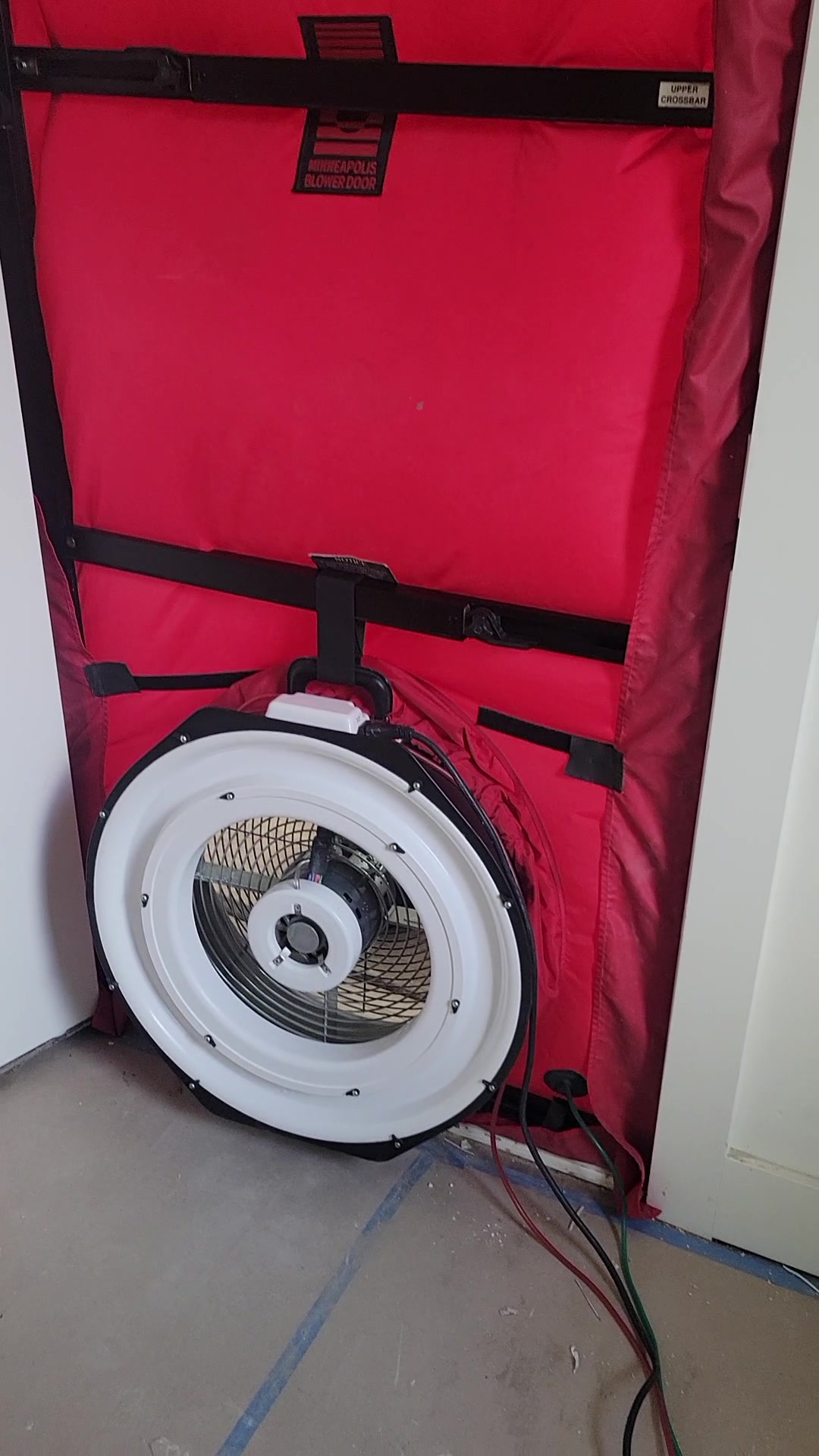
A report may include CFM50, the measured airflow at a pressure difference of 50 pascals, and ACH50, which relates that leakage to the tested volume. These describe a controlled test, not the amount of humid air entering during every hour of normal weather. Keep the result, test conditions and observed leakage paths together. See PNNL’s enclosure leakage guide.
For the broader explanation of the equipment and these measurements, read what a blower door test can and cannot tell you.
A leakage number is not a humidity diagnosis
A blower door result cannot tell you how much of a moisture complaint comes from outdoor air, indoor activities, a water leak or the cooling system. EPA identifies several moisture sources, including plumbing leaks, showers and cooking. It also explains that air conditioners and dehumidifiers can reduce indoor moisture, while cooling too quickly can leave insufficient runtime for moisture removal. Read EPA’s home moisture guidance.
That is why a measured leak and a clammy room should be connected through evidence. If the investigation finds an air path near the affected room, ask how it relates to the complaint. If the room remains damp after that path is corrected, the next question may involve cooling, exhaust, another moisture source or separate duct evaluation. A whole-home leakage result does not isolate duct leakage.
Our North Houston humid-room guide covers the broader attic-side symptoms. Testing adds measurements to that investigation; it does not turn every moisture problem into an insulation job.
Choose a repair and a way to check it
Before approving work, ask for three things:
- The finding: What was measured, and which openings or conditions were actually observed?
- The proposed correction: Why would air sealing, insulation, duct work or another service address that finding?
- The follow-up: Will the contractor compare leakage measurements, revisit the room’s temperature and humidity, or use another check appropriate to the original complaint?
A repeat blower door test can evaluate a change in enclosure leakage when the preparation and tested space are comparable. It does not establish that indoor humidity is controlled. For a moisture complaint, keep the room observations and operating conditions alongside any before-and-after leakage numbers.
Air sealing addresses unwanted air paths. Insulation addresses heat transfer. Neither substitutes for finding and correcting an active water leak. The repair plan should follow the findings rather than a single number.
Start with an assessment or arrange paid testing
Attic Magic’s Home Comfort Assessment is a no-cost starting visit of about one hour. We discuss your comfort concerns and check accessible attic conditions, insulation coverage and visible duct concerns. It does not reserve or include a blower-door or measured duct-leakage test.
Book a no-cost Home Comfort Assessment. Tell us your Houston location so we can confirm coverage.
For paid home performance diagnostics, call or text 832-669-5816. We agree on the testing scope, price and dedicated appointment separately. The standard assessment calendar does not book diagnostics.