
If a room will not stay comfortable, adding an attic fan can sound like a straightforward next step. Before changing vents or roof equipment, it helps to separate two questions: How is the attic ventilated, and how well is the living space separated from it?
For a Kingwood homeowner, there is also a planning question: will the proposed exterior work need review by your village association? Measurements and association approval serve different purposes. Neither replaces the other.
Two air paths, two different questions
Attic ventilation concerns airflow through the attic’s ventilation openings. House air leakage concerns unintended openings in the enclosure around the conditioned living space.
A blower-door test uses a calibrated fan temporarily mounted in a doorway to measure enclosure leakage under controlled pressure. With appropriate test conditions, smoke or infrared observations can help locate leakage paths. Those findings can help define an air-sealing scope. The test does not measure whether an attic has the right amount of ventilation or determine which attic fan to buy. PNNL explains what blower-door testing measures.
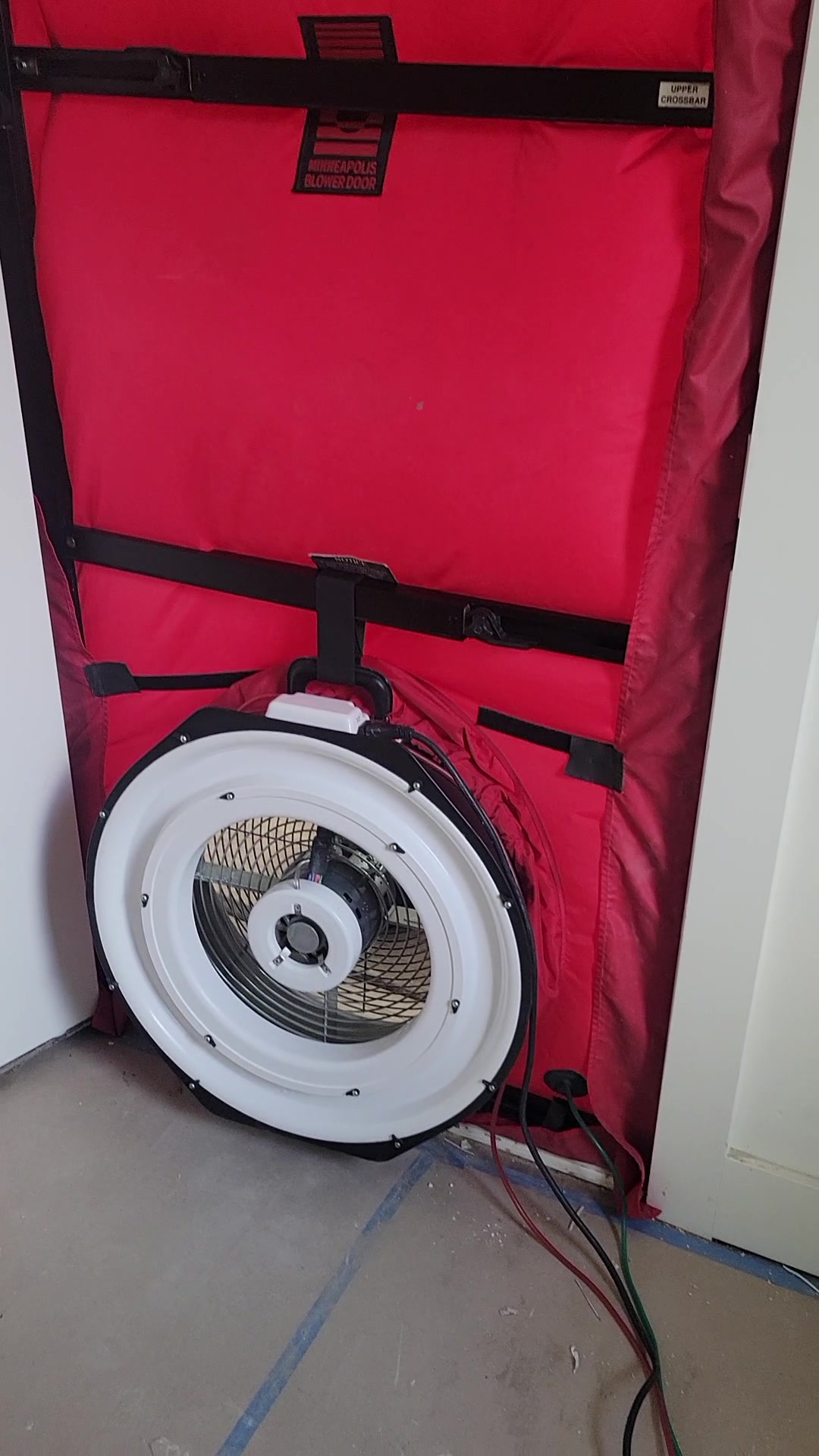
Blower-door fan mounted in a temporary doorway panel.
Why checking ceiling leaks matters before adding a fan
ENERGY STAR cautions that powered attic fans can pull conditioned air from the house into the attic when soffit ventilation is blocked and the attic is not well sealed from the living space. That can make the air conditioner work harder. Its guidance emphasizes air sealing, insulation and unobstructed ventilation paths. Read ENERGY STAR’s attic-ventilation guidance.
That warning is conditional; it does not mean every attic fan causes a problem. It does mean a fan proposal deserves more explanation than “the attic is hot.” Ask what was inspected, what leakage was found and why the proposed work fits those observations.
Attic Magic’s Kingwood comfort and air-sealing guide covers the broader starting questions for hot rooms. A blower-door test can add measured leakage information to that conversation, rather than settle every comfort question by itself.
What to ask for in a testing scope
A useful agreement should make clear whether the visit includes a whole-house leakage measurement, leak-location work, or both.
Ask for the test pressure and reported units. CFM50 describes airflow at a 50-pascal pressure difference. ACH50 also uses the home’s conditioned volume, so that volume matters. Neither figure is simply the home’s natural air-change rate during ordinary weather. If you want a before-and-after comparison, agree on consistent preparation and documentation. PNNL’s enclosure-leakage guide describes the measurements and testing process.
Tell the tester about fireplaces and fuel-burning equipment before the visit so safety and preparation can be addressed. Do not seal combustion-air openings as a do-it-yourself shortcut.
The number alone will not specify insulation depth, size an air conditioner, diagnose duct leakage or promise a dollar saving. Those questions require their own observations or evaluation. Our guide to what a blower-door test can and cannot tell you explains those limits.
Kingwood planning: check your own village’s requirements
Before approving exterior work, check the requirements for your actual property. For example, Trailwood’s architectural-control page lists new roofs among changes subject to review and directs owners to their section-specific restrictions. Sand Creek’s architectural-control guidance says certain changes need prior approval and asks homeowners to provide supporting details.
These are examples from two associations, not one rule for every Kingwood village. Ask your own association whether a proposed vent, roof or exterior-equipment change needs approval before work starts. A blower-door report documents testing; it does not authorize exterior changes or replace a roof or ventilation design.
Start with the right visit
Attic Magic’s no-cost Home Comfort Assessment is a starting visit of about one hour to discuss concerns and review possible next steps. Book a Home Comfort Assessment.
Blower-door and duct diagnostics are paid, separately scoped services with an agreed price and a dedicated appointment. They are not included in the standard assessment booking. To discuss testing for your Kingwood home, call or text 832-669-5816, or review our home-performance diagnostics options.