
A drafty room and a damp room can overlap, but they do not necessarily need the same repair. If your New Caney home has had water enter during a storm, a roof leak or a plumbing problem, that history matters before you schedule pressure testing or cover an area with new insulation.
A blower door measures air leakage through the home’s enclosure. It does not tell you whether previously wet materials are dry, whether a water-entry problem has been corrected or whether a home is clear of mold. Here is how to put that test in the right place in your repair plan.
Start with your home’s water history
The National Weather Service provides a river forecast resource for the East Fork San Jacinto River at New Caney. That is a useful local resource to keep handy. A river forecast, however, cannot establish whether water entered your home, where it came from or what condition the building materials are in.
Before an assessment, write down what actually happened at your property:
- Did water enter after rain, through the roof, from a pipe or from an AC drain?
- Which rooms or materials became wet?
- What was repaired, dried or replaced—and what records or photos do you have?
- Does the same stain, damp area or odor return?
This is a starting record, not a diagnosis. A ceiling stain after rain and a room that feels clammy while the AC runs are different clues. Give the assessor both the symptom and the timing rather than assuming that all moisture is coming through air leaks.
EPA’s moisture guidance for homeowners emphasizes fixing the water source and drying wet materials promptly. It also explains why cleaning visible mold without correcting the water problem can allow it to return. Adding insulation or sealing a gap does not replace that work.
What a blower door can add
A calibrated fan installed in an exterior doorway creates a controlled pressure difference between indoors and outdoors. The airflow needed to maintain that pressure provides a measurement of enclosure leakage. During the test, smoke tracing can help locate air paths; thermal imaging may help when conditions provide enough temperature contrast. PNNL explains the equipment and investigative methods.
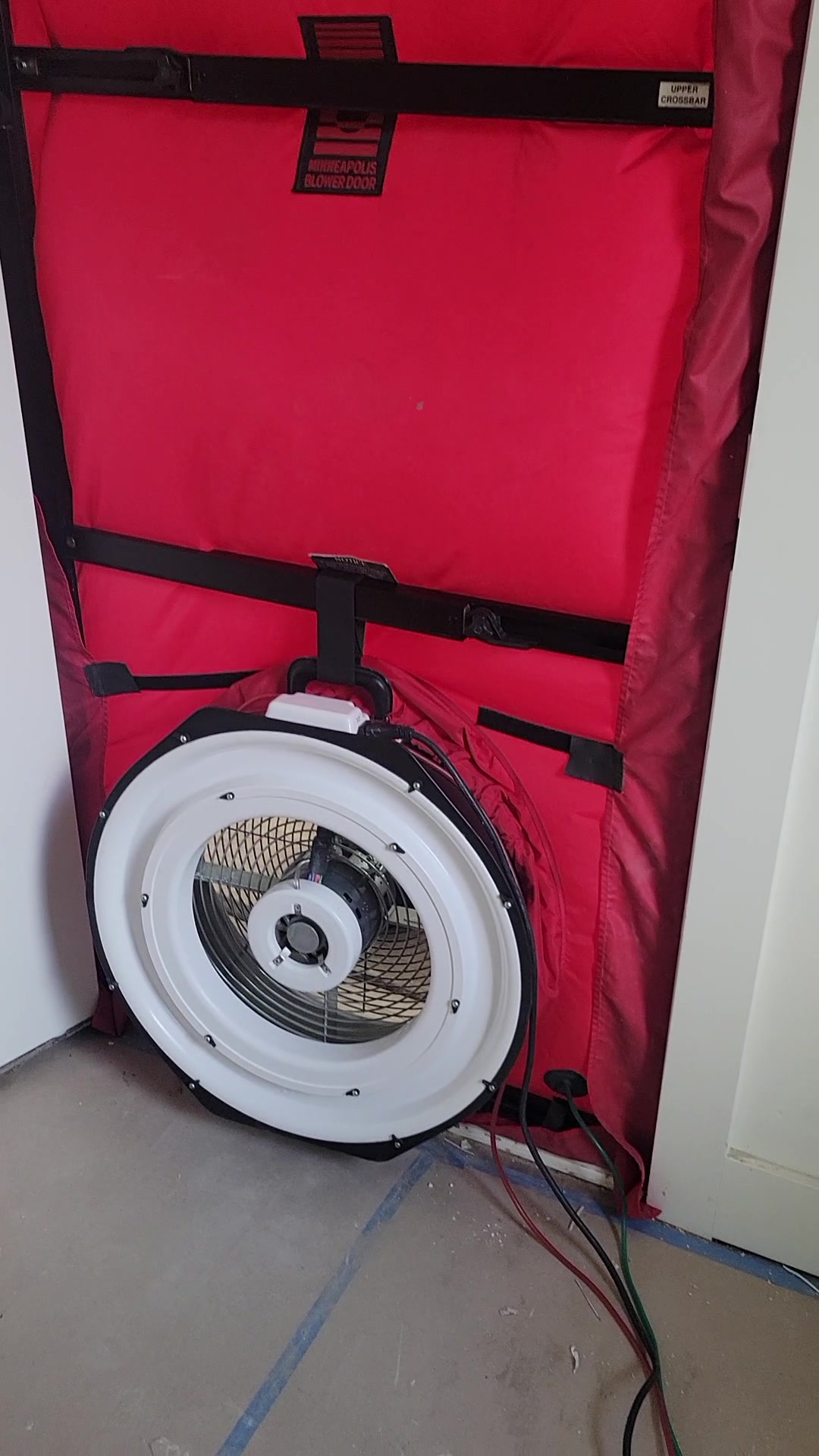
Blower-door equipment from Attic Magic’s own footage. Equipment illustration; not presented as a New Caney project.
Once water-related concerns and testing safety have been addressed, that information can help answer a different question: where is unwanted air moving through the enclosure, and which air-sealing repairs are worth investigating?
Reports may show CFM50, the airflow measured at a 50-pascal pressure difference, or ACH50, which relates that leakage to the enclosed volume. These are controlled-test measurements. They do not directly describe everyday outdoor-air exchange, moisture removal or the amount of money a repair will save.
When testing needs to wait
Tell the person arranging the test about known or suspected mold, unresolved water damage, loose hazardous materials, fireplaces and fuel-burning appliances.
PNNL’s existing-home testing guidance calls for inspecting potential hazards before testing. Depressurization can draw contaminants from building cavities into living space. A qualified tester must decide whether testing can proceed safely, requires a different method or needs remedial work first.
A blower-door appointment is not a mold inspection or remediation clearance. If water damage or suspected contamination requires a specialist, resolve that scope before treating pressure testing as the next step. Do not seal appliance vents or disturb suspect materials yourself to prepare.
Keep air leakage, insulation and ducts separate
Even in a dry home, one leakage number cannot settle every comfort complaint.
Insulation: A blower-door result does not establish insulation depth, coverage or R-value. Accessible materials still need inspection before deciding what to add or replace.
Ducts: A whole-house enclosure test is not a measured duct-leakage test. ENERGY STAR identifies hard-to-condition rooms and damaged or poorly connected ducts as reasons to investigate duct performance.
Humidity: The enclosure result does not measure the AC’s moisture-removal performance. Persistent indoor humidity can require other measurements and investigation.
For a broader explanation of the test and its limits, read What a Blower Door Test Can and Cannot Tell You About Your Home.
Ask for a repair sequence you can understand
Before paying for diagnostics or insulation, ask:
- Is there an unresolved water or safety issue that comes first?
- What question will the proposed test answer?
- Does the agreed scope include enclosure testing, duct testing or other checks?
- What findings and measurements will be documented?
- How will the proposed repair be checked afterward?
For New Caney homeowners ready to investigate attic-related comfort concerns, our local air-sealing guide explains the accessible attic conditions we consider. The right sequence depends on your home’s findings.
Choose your next step with Attic Magic
A no-cost Home Comfort Assessment is a starting visit of about one hour. We discuss comfort concerns, check accessible attic conditions and explain possible next steps. It does not include scheduled blower-door or measured duct-leakage testing.
Book a no-cost Home Comfort Assessment for that starting visit.
For paid home performance diagnostics, call or text 832-669-5816. We agree on scope, price and a dedicated appointment separately. The standard assessment calendar does not reserve a diagnostic visit.