If your Porter home has high electric bills or a room that never feels comfortable, you may come across both a utility energy audit and a paid blower-door test. Before scheduling either, ask what the visit will actually investigate and what you will receive afterward.
A general review, a program eligibility visit and a measured air-leakage test can answer different questions. Start with the decision you need to make: choosing an improvement, investigating a comfort complaint or checking whether air-sealing work changed the home’s leakage.
An option to check if you are an Entergy Texas customer
For Porter homeowners whose home is served by Entergy Texas, its Home Energy Efficiency Upgrade Program is worth checking before committing to work. Entergy describes a no-cost home energy audit through participating contractors, followed by recommendations and an eligibility review for improvements.
The published standard-program criteria include being an Entergy Texas customer, a home at least eight years old, generally good structural condition and restrictions on recent efficiency upgrades. Contractor coverage and remaining funding must be confirmed directly. Your Porter mailing address alone does not establish eligibility.
Ask the participating contractor whether the proposed visit includes measured enclosure leakage, duct testing, a written report or only the checks needed for the program. Do not assume that the word “audit” guarantees a particular test. Attic Magic’s assessment and paid diagnostics are separate services; this guide does not represent Attic Magic as an Entergy-approved program contractor.
What a blower door adds
A blower door uses a calibrated fan mounted in a temporary doorway panel to create a pressure difference between indoors and outdoors. Measuring airflow at that pressure helps quantify leakage through the home’s enclosure. Smoke tracing can help investigate individual air paths, and thermal imaging can provide additional clues when conditions are suitable. PNNL explains the equipment and its uses.
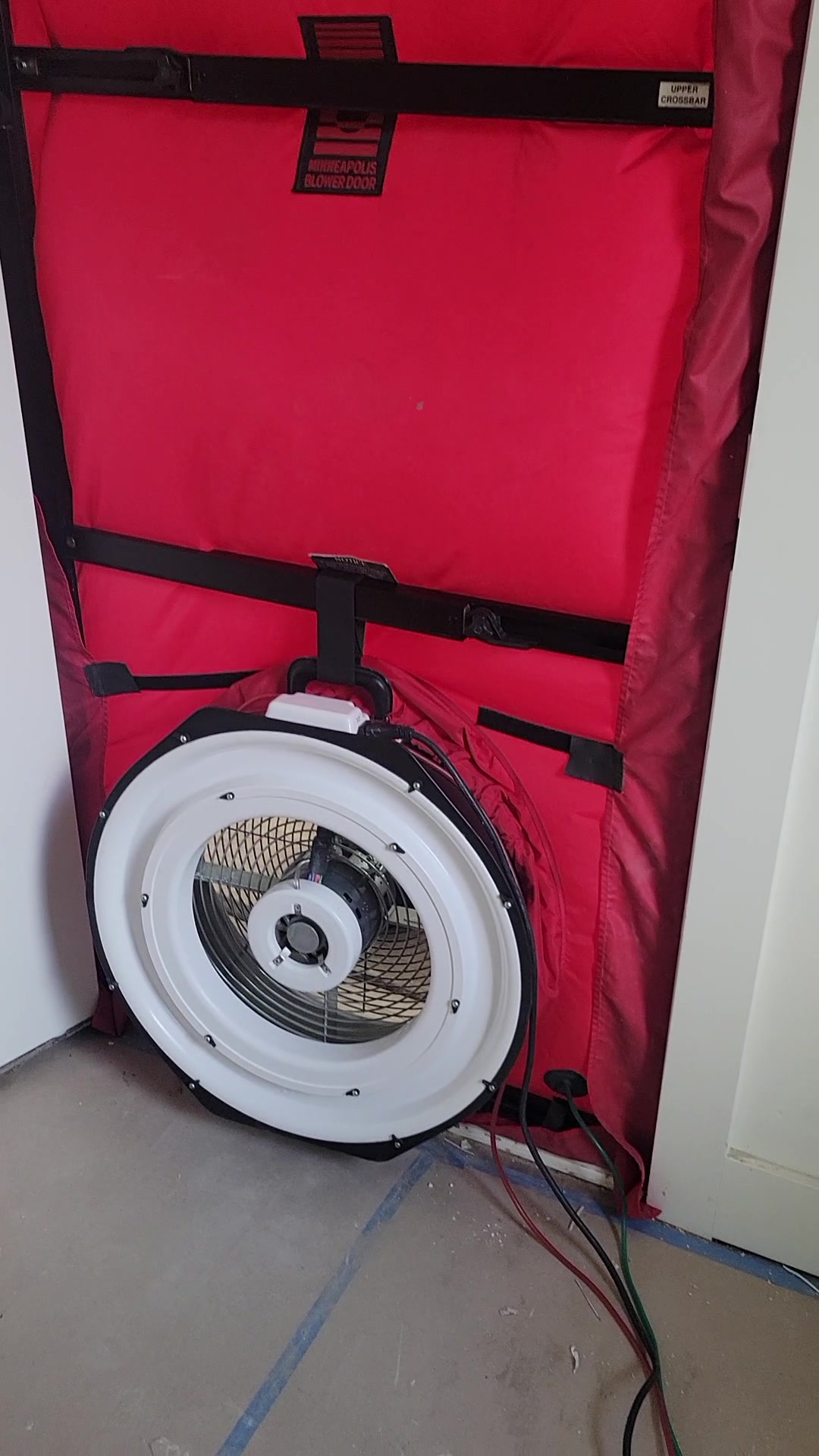
Blower-door equipment from Attic Magic’s own footage, shown as an equipment example rather than a Porter project or test result.
Reports may show CFM50, airflow measured at a 50-pascal pressure difference, or ACH50, that leakage expressed relative to the tested volume. These describe a controlled test, not everyday air exchange. Ask which spaces were included and keep the test preparation and conditions with the result. PNNL’s enclosure leakage guide explains the measurements and documentation.
Match the visit to the question
Before booking, use these questions to compare the proposed scopes:
- Considering utility-funded improvements? Confirm your electric service, program eligibility, contractor participation and current availability with the program. Ask which measurements are included and whether additional services cost extra.
- Trying to understand an air-leakage concern? Ask whether the scope includes a measured enclosure result, investigation of suspected openings and a written explanation of how the findings guide repairs.
- Checking completed air sealing? Ask about comparable before-and-after testing, including the same tested space and preparation.
- Investigating one uncomfortable room? Ask how the investigation will connect the room’s symptoms with observed conditions instead of relying only on a whole-home number.
A blower-door result does not establish the correct insulation R-value, size the AC, isolate duct leakage or guarantee a reduction in your bill. If the question concerns those systems, agree on the additional inspection or testing needed. Our Porter air-sealing guide covers attic-side concerns; the core blower-door guide explains the test’s broader limits.
Bring existing reports to the next conversation
If you already have a utility audit or an earlier test, share it before arranging another visit. Highlight what was measured, what repairs were recommended and which concerns remain. Ask whether the existing information answers the current question or whether a different investigation would add something useful.
Tell the tester about fireplaces, fuel-burning appliances and known hazards before testing. The tester needs to plan safe preparation; do not seal appliance openings or adjust fuel-burning equipment yourself.
Choose your next step with Attic Magic
Our no-cost Home Comfort Assessment is a starting visit of about one hour. We discuss your comfort concerns, check accessible attic conditions and explain possible next steps. It does not include scheduled blower-door or measured duct-leakage testing.
Book a no-cost Home Comfort Assessment if you want that starting visit. For paid home performance diagnostics, call or text 832-669-5816. We agree on scope, price and a dedicated appointment separately. The standard assessment calendar does not reserve a diagnostic visit.